

Apple Expands CarPlay With ChatGPT Voice Integration, Marking New Step for AI in Cars
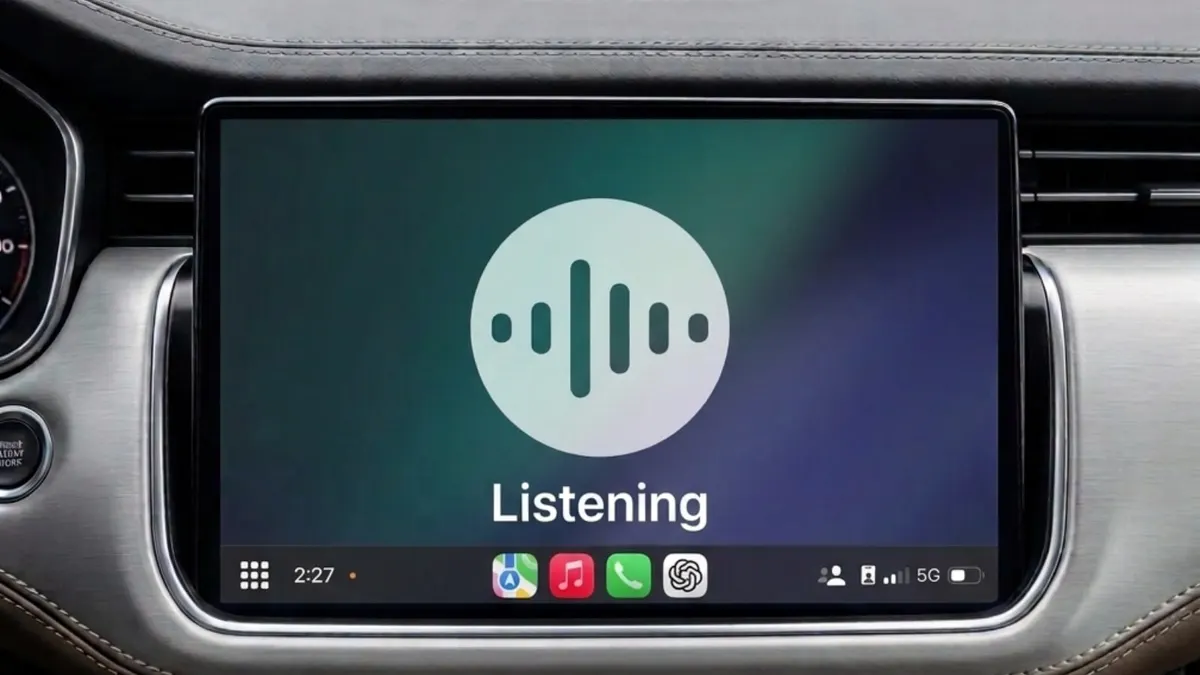
Apple is pushing artificial intelligence deeper into the driving experience with a new update that integrates ChatGPT voice interaction into Apple CarPlay. The change allows drivers to communicate with the AI assistant through voice commands while using compatible vehicles equipped with Apple’s infotainment system.
The update arrives as automakers and technology companies race to turn vehicles into fully connected digital platforms. Apple’s implementation focuses primarily on voice responses, meaning drivers can ask questions or request assistance while keeping their attention on the road. According to technology reports, the AI interaction does not currently display full chatbot responses visually on the dashboard screen due to Apple’s strict safety rules for CarPlay applications.
The system works by linking the ChatGPT mobile app with CarPlay, allowing drivers to manually launch the assistant through the interface and communicate through voice. While the feature does not yet allow a wake-word activation similar to smart speakers, industry analysts say it signals a broader shift toward conversational interfaces becoming part of everyday mobility.
Experts say this move reflects a larger trend in the technology sector where artificial intelligence is expanding beyond smartphones and computers into physical environments. Vehicles represent one of the most valuable new platforms for digital services, offering opportunities for navigation assistance, messaging, entertainment, and real-time information delivery.
Automakers have been exploring AI-driven dashboards for several years, but integrating advanced language models raises additional safety and usability questions. Regulators and car manufacturers are carefully monitoring how conversational AI interacts with drivers, particularly when vehicles are in motion.
Apple has emphasized that its implementation prioritizes driver safety by restricting complex visual outputs and relying primarily on voice responses. The company has not yet announced a timeline for expanding the feature with additional AI capabilities.
Technology analysts believe that in-car AI assistants could eventually manage a wide range of tasks, from scheduling and navigation to vehicle diagnostics and entertainment recommendations. As vehicles become increasingly software-driven, companies like Apple are seeking to secure a dominant role in the digital ecosystem surrounding connected cars.
The rollout highlights how artificial intelligence is steadily moving into more regulated environments such as transportation, where reliability, privacy, and user trust are critical. While the feature currently offers a limited set of capabilities, it represents another step toward AI-powered mobility experiences that may become standard in future vehicles.